
AI product engineering
A development environment that takes natural-language intent and produces structured, multi-file projects, with previews and deployment the user controls.
From an AI-powered Web3 development idea to a growing product ecosystem spanning decentralised compute, GPU infrastructure, user systems and staking.
Anointed Coder has worked with the client from the initial TokenOS concept through the platform's current stage, and the engagement continues as the product roadmap expands.
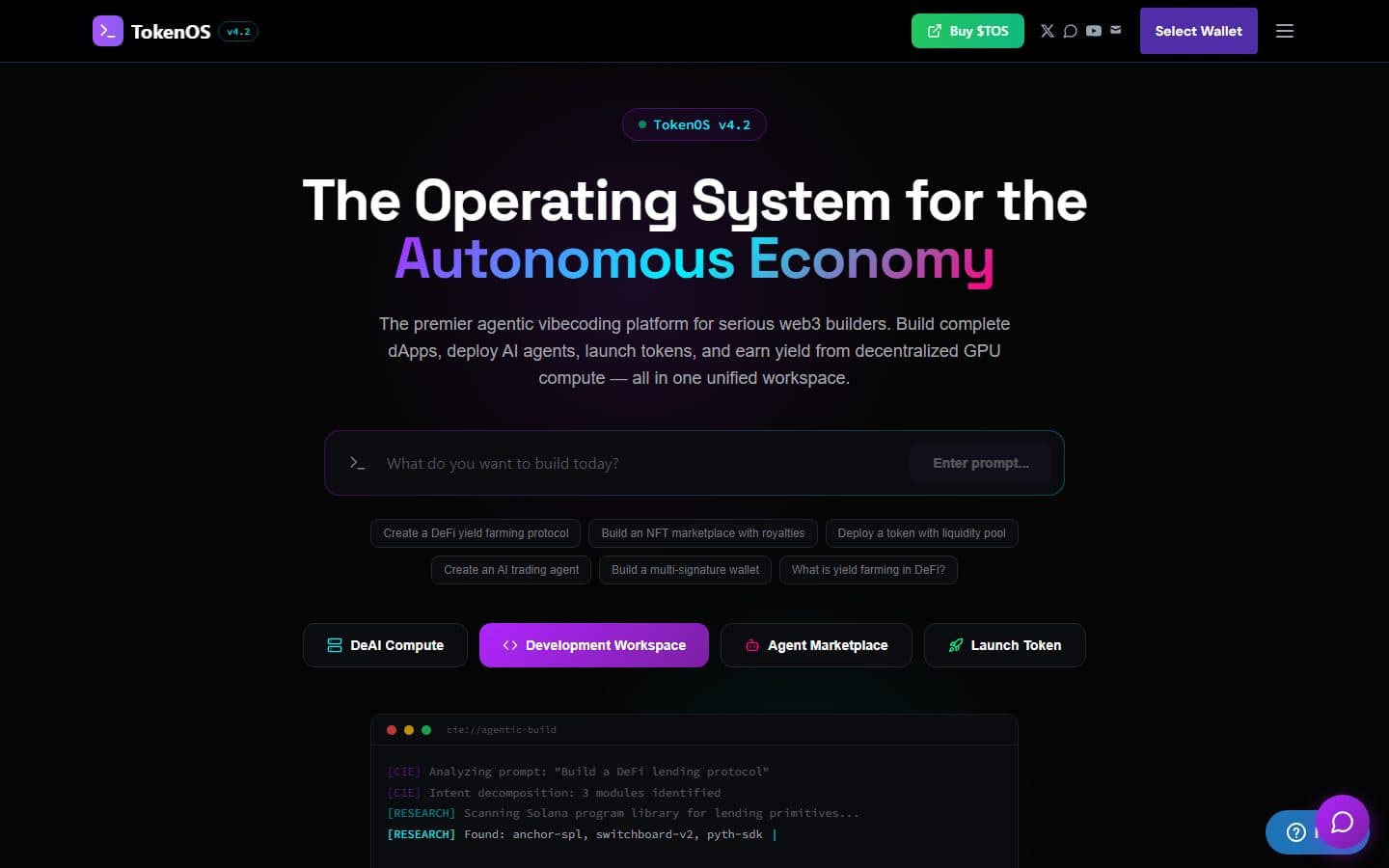
TokenOS did not begin as five separate products. The engagement started with one product idea, an AI-powered environment for building Web3 applications from natural language, and evolved as the client's vision expanded.
That meant the architecture and the product experience had to keep evolving with it: from the original development platform into a wider ecosystem covering decentralised GPU compute, usage-based GPU rentals, a shared user account layer and token staking. Each addition had to fit the products already live rather than sit beside them.
The engagement is still running. New parts of the ecosystem are engineered as the roadmap widens, on top of the systems already in production.
An AI-powered way to build Web3 products from plain language.
Scope, architecture and the first workflows the platform had to support.
Workspace, smart contracts, token launch and deployment in one place.
OpenThe ecosystem gains its own compute supply built on NVIDIA GPU nodes.
OpenCustomers rent that capacity by the minute, with allocation, metering and reputation built in.
OpenA shared account layer with conventional and wallet sign-in.
OpenNew parts are engineered as the client's roadmap widens.
The engineering capabilities this engagement demonstrates, beyond the screens.
AI-Powered Web3 Development Platform
The product the whole ecosystem grew from: where an idea becomes a Web3 application.
Core engineering challenge
Turning free-text prompts into structured, multi-file projects that compile, preview and deploy, while keeping the user in control of what ships and where.
AI-Powered Web3 Development Platform
AI-native Web3 project development
The product the whole ecosystem grew from: where an idea becomes a Web3 application.
Core engineering challenge
Turning free-text prompts into structured, multi-file projects that compile, preview and deploy, while keeping the user in control of what ships and where.
DeAI Compute Network
High-performance GPU node infrastructure
The supply side: the GPU capacity the rest of the ecosystem runs on.
Core engineering challenge
Presenting node deployment across several NVIDIA tiers, from H100 and H200 through B200 and B300 to GB300-class racks, with live network status, node leaderboards and operator tooling, so the supply side is a product in its own right.
GPU Compute Marketplace
Usage-based GPU rentals and operator marketplace
The demand side: where customers rent compute by the minute and operators earn from it.
Core engineering challenge
Marketplace logic, payments and infrastructure orchestration in one loop: confirm a payment, allocate an idle node by tier and reputation, issue an ephemeral SSH credential, meter usage per minute, and refund unused time when a job stops early.
DeAI User Portal
Account and wallet access
One identity for the compute ecosystem, whichever way a user prefers to sign in.
Core engineering challenge
Supporting email-and-password accounts and wallet-based identity for the same user base.
TOS Staking
Solana-based TOS staking and reward interaction
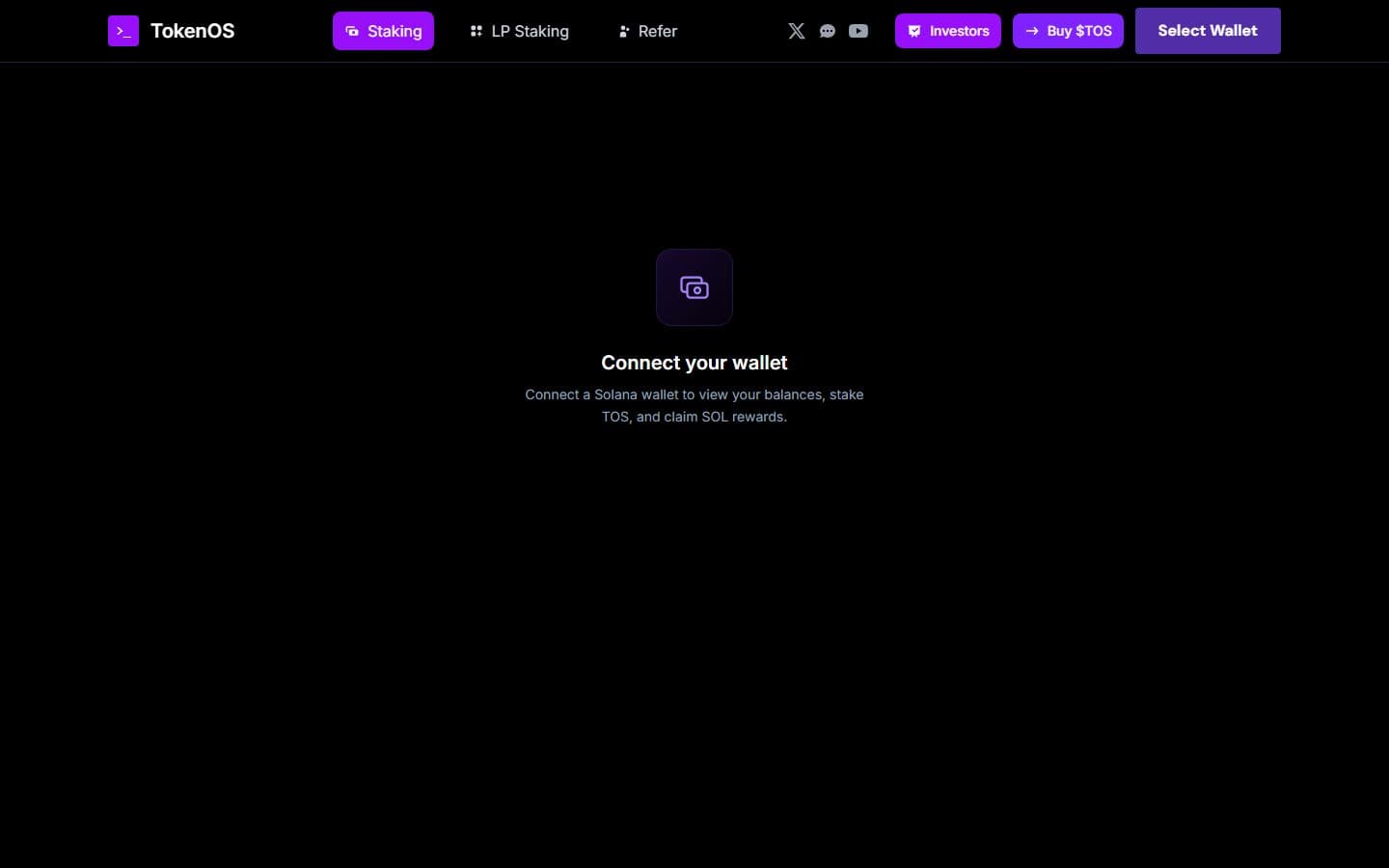
Connects token holders to the ecosystem through a wallet-gated staking flow.
Core engineering challenge
Wallet-gated flows where every balance, stake and claim shown to the user has to reconcile with on-chain state.
An AI-native Web3 development environment where a user moves from a natural-language idea to a working blockchain project, with development, smart-contract, token and deployment workflows integrated into one workspace.
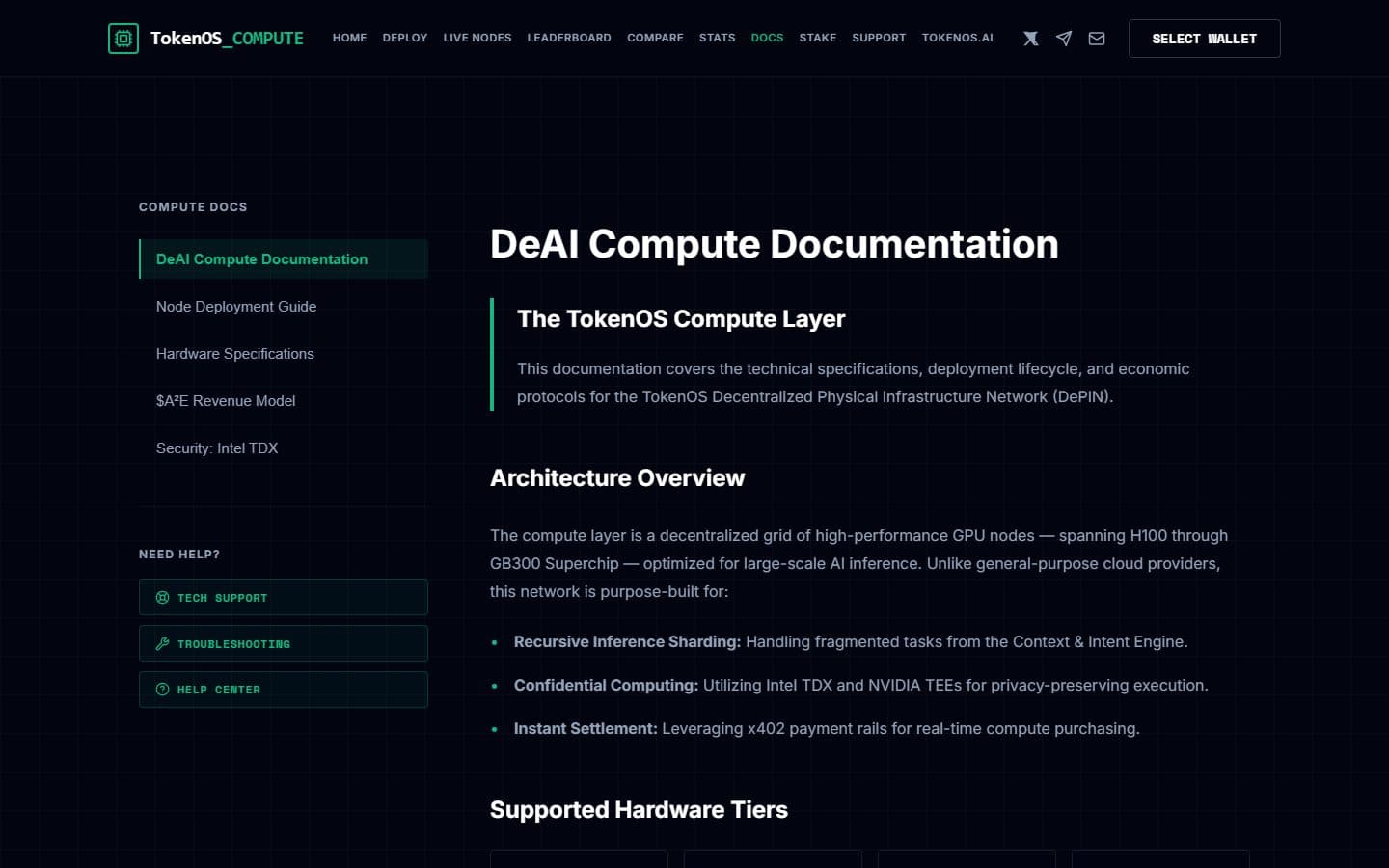
The compute-infrastructure layer of TokenOS, designed around high-performance NVIDIA GPU nodes and the infrastructure required to participate in the wider DeAI network.
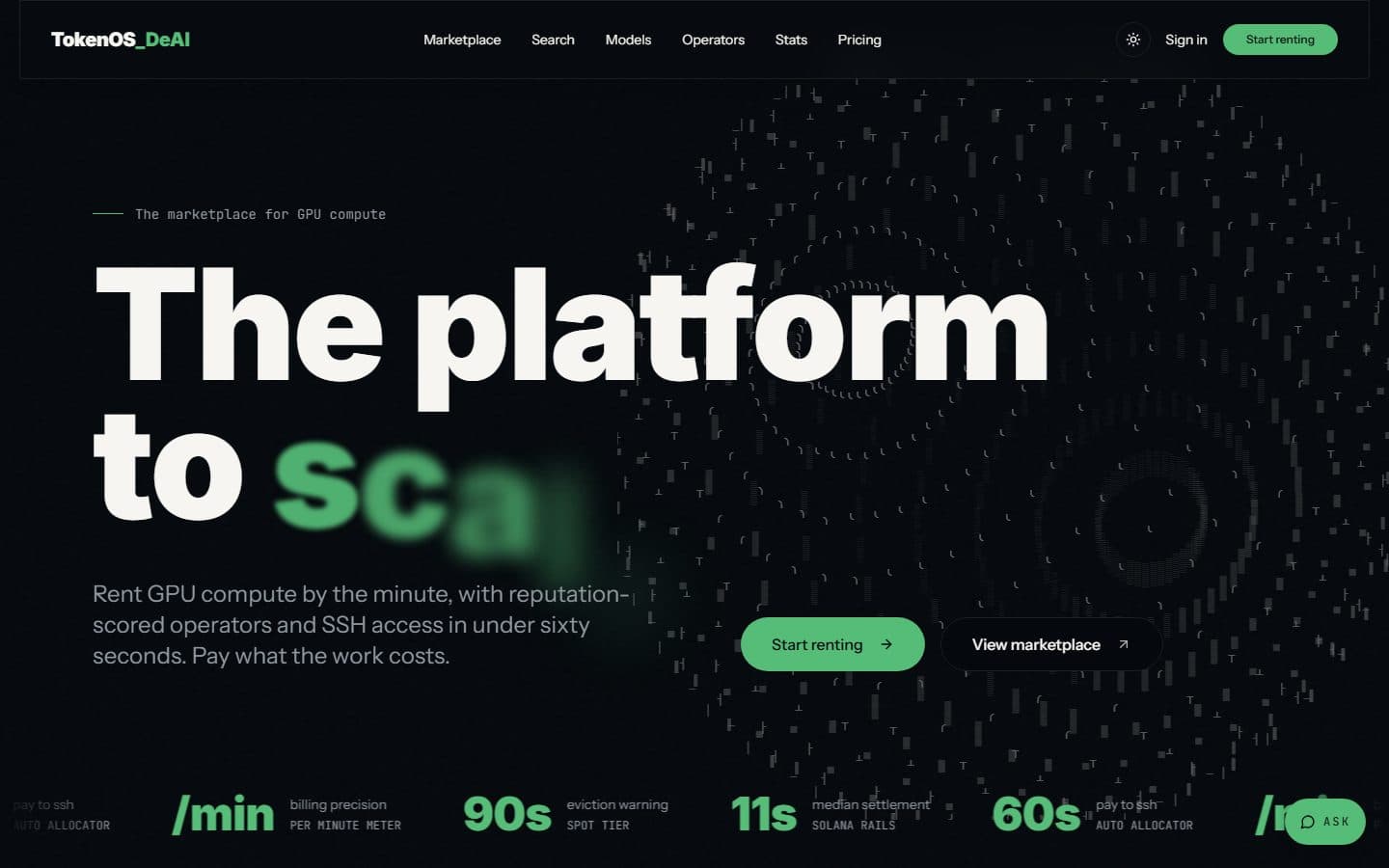
A usage-based GPU marketplace connecting customers with NVIDIA compute capacity through automated allocation, metered usage, reputation-scored operators and secure remote access.
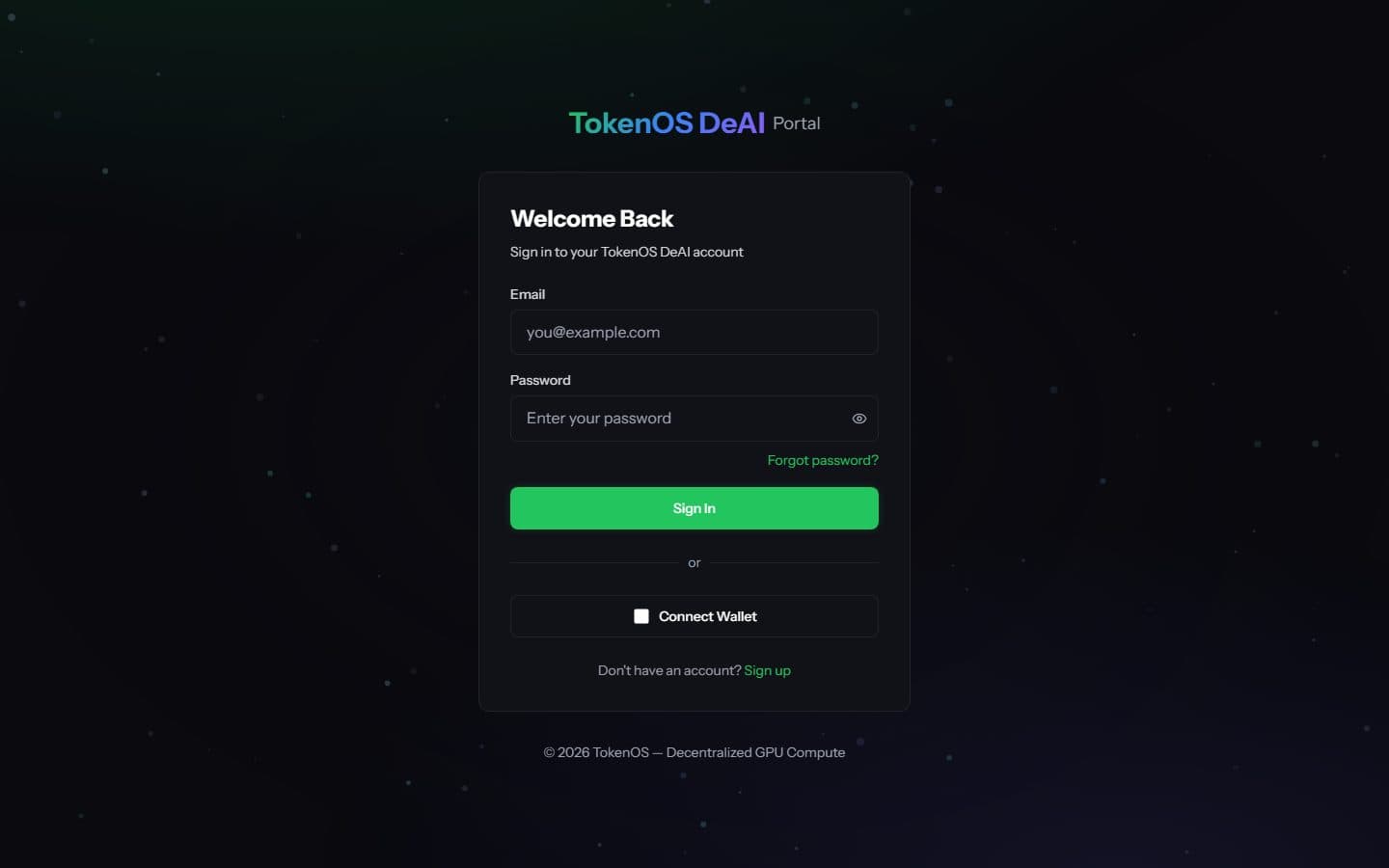
The account layer connecting users to the DeAI ecosystem through conventional authentication and Web3 wallet access.
A dedicated Solana staking application connecting the TOS token ecosystem with wallet-based staking, balance visibility and reward claiming.
A development environment that takes natural-language intent and produces structured, multi-file projects, with previews and deployment the user controls.
Wallet connection across the ecosystem, Solana settlement in the marketplace, and a staking application that reconciles balances, stakes and claims with on-chain state.
Node deployment across NVIDIA GPU tiers, live network status and operator tooling for the supply side of the network.
Automated allocation by tier, region and reputation, a public operator scoring formula, and spot, reserved and on-demand pricing in one rate sheet.
A live cost meter during a rental, allocation that reacts to confirmed payments, and inventory status that reflects operator availability.
Email and password accounts alongside wallet identity, and ephemeral SSH credentials that expire when a rental ends.
Per-minute metering, refunds for unused minutes and wallet, card and balance payment paths.
Several applications sharing identity, payments and inventory, built so the next product can attach to what already exists.
The marketplace lists CUDA, PyTorch, TensorFlow, HuggingFace, vLLM and Ollama as workloads customers can run on rented GPUs. Those are technologies the platform supports for its customers, not the stack the platform itself was built with.
An ongoing product and engineering engagement that began with the original TokenOS concept and has expanded alongside the client's roadmap.
Anointed Coder has worked with the client from the initial TokenOS concept through the platform's current stage, and the engagement continues as the product roadmap expands.